By Anne Poirer
As pet dog trainers, we often meet dogs whose breed histories were shaped by livestock work, even when those dogs are now living on sofas, walking in neighbourhoods, and attending group classes.
When we understand the differences among herding dogs, livestock guardian dogs, and multipurpose farm dogs, it becomes much easier to view the behaviour in front of us with nuance. What looks like stubbornness, reactivity, over-arousal, or “too much energy” may actually be a dog offering behaviour that once had a very specific purpose.
Herding Dogs: Specialists in Movement
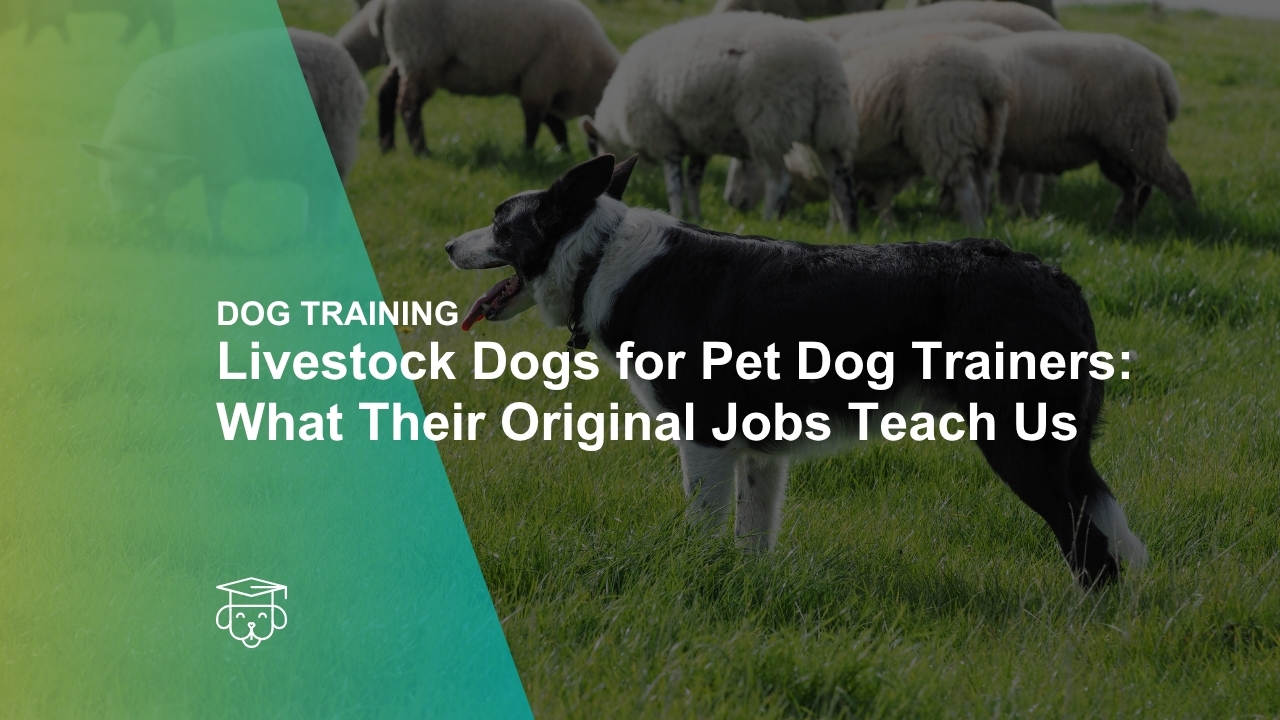
Herding dogs are movement specialists. Think Border Collies, Australian Shepherds, Australian Cattle Dogs, Kelpies, and Corgis. These dogs were developed to influence where livestock go, how quickly they move, and whether they stay together as a group. On a farm, that might mean gathering sheep, driving cattle, holding animals off a gate, or helping move stock into a pen. Herding dogs typically work in close partnership with a human handler, responding to direction as they gather, drive, or hold stock. In a pet home, the same instincts may show up as chasing children, circling other dogs, staring intensely, nipping at heels, trying to control movement, or becoming frustrated by bikes, joggers, or fast play.
This is where it helps to remember that many herding behaviours are built from controlled pieces of the predatory sequence: watching, stalking, chasing, circling, and sometimes gripping or heeling. In the right setting, those behaviours are useful and valuable. In the wrong setting, they can scare livestock, overwhelm people or other dogs, or become unsafe around moving targets. Trainers working with these dogs need to think carefully about pressure, distance, arousal, impulse control, and appropriate ways for the dog to use its brain and body without simply trying to shut the behaviour down.
For enrichment, herding dogs usually need more than simply being “run more.” They tend to do best when movement has rules and purpose. Structured stock work with a qualified instructor, obedience, scent games, agility-style activities, trick training, controlled fetch, pattern games, cooperative handling, and problem-solving tasks can all be useful. The goal is not simply to tire the dog out; it is to help the dog think, respond, regulate, and move with clarity.
Livestock Guardian Dogs: Specialists in Protection
Livestock guardian dogs, or LGDs, are protection specialists. Examples include the Great Pyrenees, Maremma Sheepdog, Anatolian Shepherd Dog, Akbash, Kuvasz, Komondor, and Kangal-type dogs. Their traditional job is not to move livestock. Their job is to live with the animals, bond with them, watch the environment, and deter predators through presence, barking, patrolling, and defensive behaviour when needed. In pet homes, that history may show up as barking at night, monitoring the property, being suspicious of unfamiliar people or animals near the home, testing boundaries, or making independent decisions.
These dogs are specialists too, but in a very different way from herding dogs. A good LGD is meant to be calm with the animals it guards, attentive to changes in the environment, and protective without being reckless. LGDs are often expected to work independently, without constant human direction, especially at night. For pet dog trainers, that means standard obedience may be only one small part of the plan. We may also need to think about territory, visitors, thresholds, livestock or household animals, fencing, owner expectations, and safe management.
Training and enrichment for LGDs need to fit the job they were built for. A guardian puppy raised for livestock work is usually introduced to the species it will protect with careful supervision, so chasing, rough play, roaming, fence-testing, or over-bonding to people do not become habits. Enrichment should support calm vigilance: appropriate territory, livestock companionship when relevant, safe patrol routes, things to chew, places to observe from, and low-arousal handling. High-speed chase games, frantic fetch, or constant excitement may work against what we are trying to build in a guardian-type dog.
Multipurpose Farm Dogs: Generalists on Mixed Farms
Multipurpose farm dogs are generalists. These are the dogs that may have helped with several jobs around a farm: alerting to visitors, moving small groups of animals, controlling pests, accompanying chores, pulling or carrying in some historical contexts, providing companionship, or doing light guarding around the yard. Examples may include English Shepherds, farm-bred collies, Australian Shepherds in some settings, Leonbergers, German Shepherd Dogs, Bouviers, Bernese Mountain Dogs, Rottweilers, and many locally selected farm lines.
Calling these dogs generalists does not mean they are simple, easy, or low-need. It means they were often expected to be adaptable and useful in more than one way. A good multipurpose dog might be people-oriented, observant, steady, strong, and able to switch between different parts of farm life. In pet training, that flexibility can be a real advantage, but we still need to watch for guarding tendencies, body pressure, environmental awareness, persistence, frustration, or a strong work ethic with nowhere appropriate to go. It may also be necessary to create a designated safe space for visitors.
Enrichment for multipurpose dogs can usually be more varied than it is for many specialists. These dogs may enjoy being included in chores, obedience, scent work, carting or drafting where appropriate, moderate exercise, supervised problem-solving, cooperative care, and social time with their people. Thinking games throughout the day and food-based problem-solving puzzles can be highly rewarding. The key is to give the dog meaningful work without assuming it can automatically do every livestock job. A multipurpose dog is not necessarily a replacement for a true guardian dog in serious predator country or for a highly trained herding dog doing complex stock work.
Why Specialists Need Specialist Knowledge
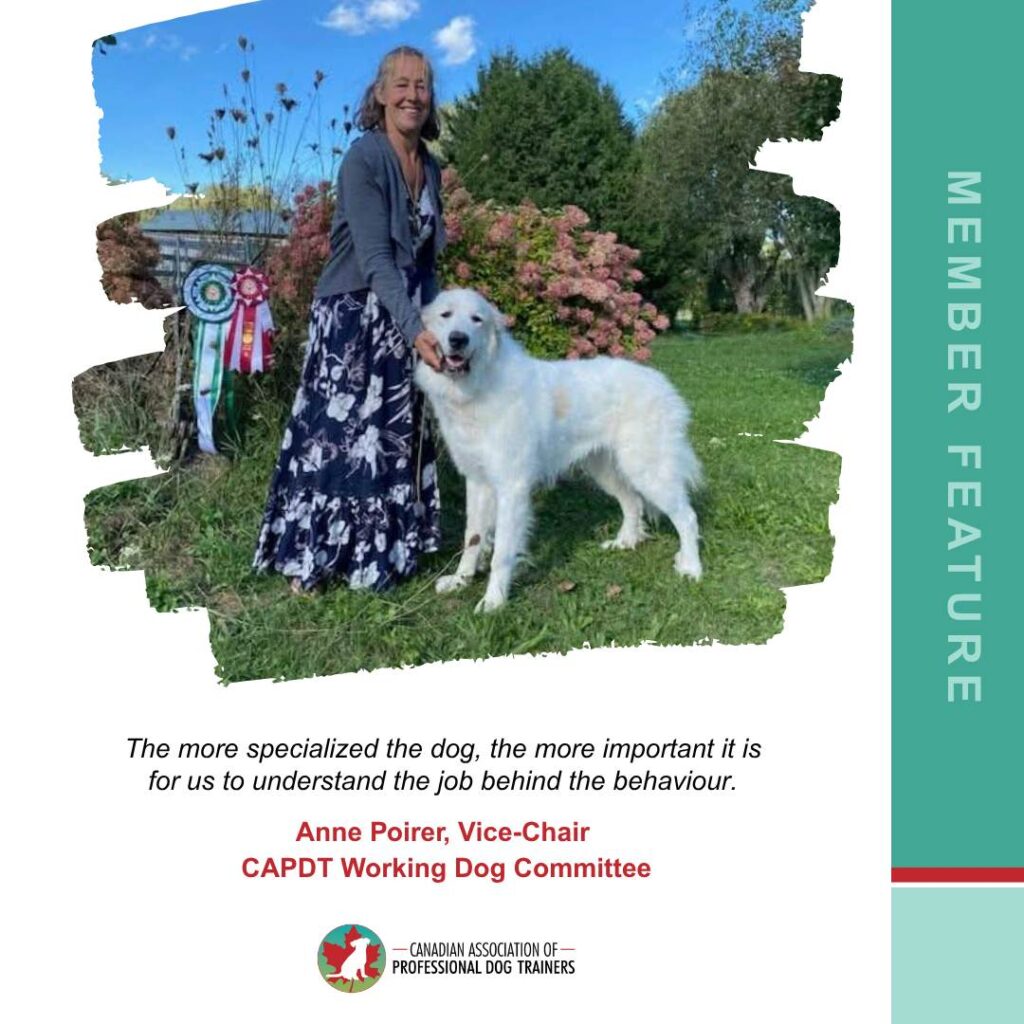
The more specialized the dog, the more important it is for us to understand the job behind the behaviour. A herding dog that stares, crouches, and circles may not simply be “intense.” It may be showing the very instincts needed to control stock. A guardian dog that barks at night or chooses to monitor the property instead of greeting every visitor may not be “stubborn.” It may be doing exactly what generations of dogs were selected to do. When we misread those behaviours, we can accidentally create more frustration, suppress useful communication, or make the situation less safe.
Specialist training is not just obedience with a breed label attached. It requires real knowledge of the work: livestock behaviour when stock are involved, breed tendencies, developmental stages, predator pressure, fencing, handler timing, arousal levels, and the difference between useful instinct and problematic behaviour. With herding breeds, we need to know how to shape movement without creating harassment. With LGDs, we need to know how to support bonding, independence, deterrence, and safety without creating roaming, stock-chasing, or inappropriate aggression. Sometimes the best professional choice is to consult, collaborate with, or refer to someone who works in that specialty.
Why Specialists Rarely Work Together
This also explains why different livestock specialists do not always work smoothly together. Herding dogs and livestock guardian dogs may both be “livestock dogs,” but they are not trying to do the same thing. A herding dog uses pressure and movement to make animals go somewhere. A guardian dog is selected to reduce threat, stay with the flock, and respond to disturbances. From the guardian dog’s point of view, a fast, intense dog pressuring sheep may look like a problem. From the herding dog’s point of view, a guardian dog standing between it and the livestock may block the job.
That is why specialists rarely work at the same moment unless there is an experienced handler, well-trained dogs, and clear management in place. The LGD may need to be moved, settled, or separated before active herding begins. The herding dog may need strong control and respect for distance. Without that planning, the dogs can interfere with each other, increase stress in the livestock, or create conflict between dogs. For pet trainers, this is a useful reminder not to generalize too quickly from one livestock-dog type to another.
The Practical Takeaway
A helpful question for trainers is: “What job shaped this dog?” If the dog was bred to move animals, we need to think about movement, pressure, control, and impulse regulation.
If the dog was bred to guard livestock, we need to think about territory, vigilance, independence, bonding, and low-arousal management that allows them a private decompression “bed”. If the dog comes from a multipurpose farm background, we need to think about adaptability, strength, alerting, social connection, and varied work outlets.
When we respect the differences between specialists and generalists, our plans become more humane, our expectations become clearer, and our clients are better equipped to live safely and thoughtfully with the dogs they love.
If members wish more in-depth information on Livestock Guardian Dogs, reach out to Anne Poirer, vice-chair of CAPDT’s Working Dog Committee, and Director of Peartree Animal Wellness Center and Rescue Rehab, at pawcenter@hotmail.com