When people think about service dogs, they often picture a highly trained dog accompanying their handler through daily life. While that image is certainly accurate, it only tells part of the story.
A service dog (also called an assistance dog in some countries) is a specially trained dog that performs specific tasks to help mitigate the effects of a person’s disability. These tasks may include mobility assistance, medical alert work, guide work for individuals with vision impairments, hearing alerts, psychiatric support tasks, and many other forms of disability-related assistance.
What makes a service or assistance dog different from a therapy dog, emotional support animal, or companion dog is their ability to perform trained tasks that directly support their handler’s independence, safety, and daily functioning.
While these dogs perform incredibly important work, it’s equally important to remember that they are still dogs. They have physical, emotional, social, and behavioural needs that extend beyond their working responsibilities.
Assistance Dogs Need More Than Work
A common misconception is that assistance dogs spend all day working. In reality, ethical assistance dog partnerships recognize that a dog’s welfare depends on much more than task performance.
Like all dogs, assistance dogs need opportunities to:
- Rest and recover
- Play and explore
- Exercise and move freely
- Engage in natural canine behaviours
- Build social connections
- Experience enrichment and mental stimulation
- Enjoy time when they are simply off duty
Supporting these needs helps maintain not only the dog’s quality of life but also their long-term ability to work successfully and confidently.
A Welfare-Conscious Approach
Modern animal welfare science often uses the Five Domains Model of Animal Welfare, which looks at:
- Nutrition
- Environment
- Health
- Behaviour
- Mental State
When the first four domains are thoughtfully supported, dogs are more likely to experience positive emotional well-being, resilience, and overall quality of life.
For assistance dogs, this means balancing working responsibilities with opportunities for relaxation, enrichment, exercise, and recovery.

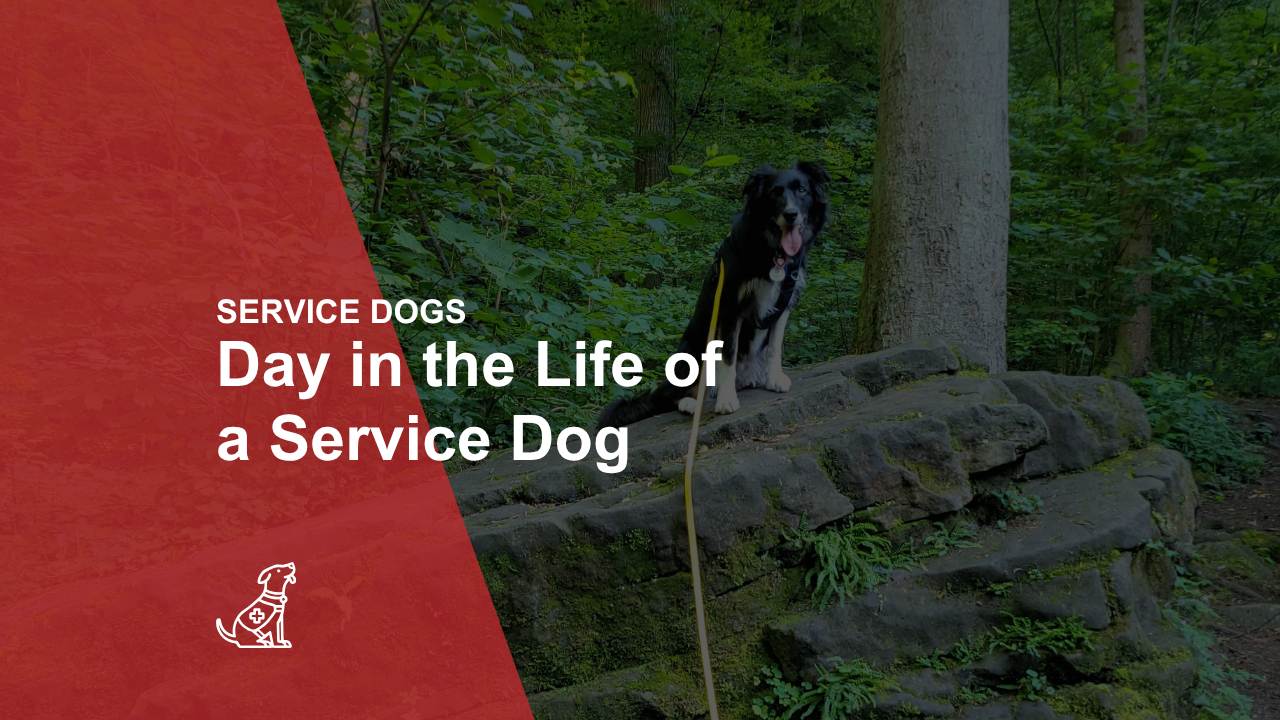
What Does a Typical Day Look Like?
A healthy day for an assistance dog often includes:
- Calm morning walks with opportunities to sniff and explore
- Nutritious meals and access to fresh water
- Relaxation time at home
- Assistance work and public access outings
- Regular decompression breaks
- Rest periods throughout the day
- Training games and relationship-building activities
- Off-duty exercise and social opportunities
- Dinner and evening routines
- Winding down and restorative sleep
It’s also important to recognize that handlers may occasionally face health challenges, energy limitations, or other circumstances that make meeting every aspect of a dog’s routine difficult. In these situations, having a support system or designated helper can play an important role in ensuring the dog’s ongoing welfare needs continue to be met.
The Key Takeaway
A successful assistance dog partnership supports both members of the team.
Assistance dogs are remarkable working partners, but they are also living beings with their own needs, preferences, and emotions. By ensuring they have opportunities for rest, enrichment, exercise, social connection, and recovery, we help protect their welfare while supporting the long-term success of the partnership.
When we care for the whole dog—not just the working dog—we create healthier, happier, and more sustainable assistance dog teams.
Want to learn more about what a balanced, welfare-conscious day looks like for an assistance dog?
Download our free PDF resource: “A Day in the Life of an Assistance Dog.” This guide provides a sample daily schedule while highlighting how each activity supports the dog’s physical health, behavioural needs, emotional well-being, and overall quality of life.