Service Dog Division
Information on service dogs in Canada
Service Dogs
Here you will find information on service dogs in Canada to help you, your clients, and potential service dog users across Canada.
News Articles:
October 20, 2022 – The Working Dog Committee has written a definition of what a Working Dog in Canada is. You can access the complete definition of a Working Dog here.
February 18, 2021 – Standards Council of Canada seeks public comment by 3/18/21 to develop national position on developing an international standard for assistance dogs.
December 1, 2020 – Manitoba Human Rights in Webb v. LHS Holdings holds that users of service dogs that mitigate a mental health disability cannot be denied public access.
March, 2023 – Read our revised Draft Report on Service Dogs in Canada – specifically written to provide comprehensive info for dog trainers and people with disabilities (including their support teams and service/care providers).
What is a Service Dog or Assistance Dog?
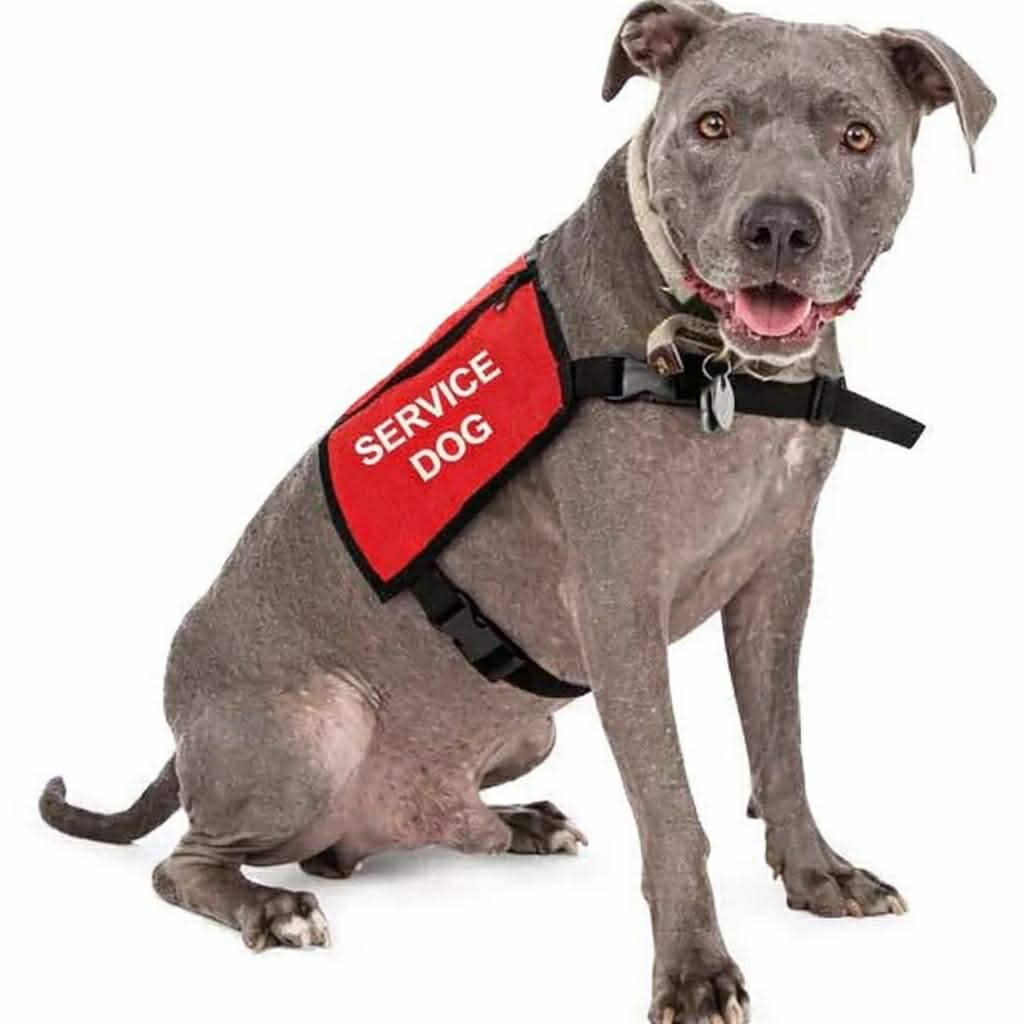
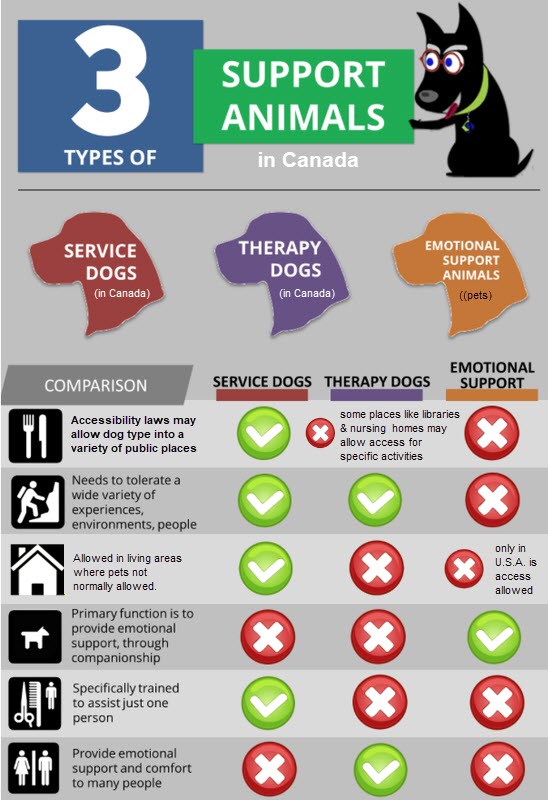
A service dog (also called assistance dog in some countries) is a task-oriented assistance dog that has been individually trained to perform one or more specific tasks or work that directly mitigate the effects of a person’s disability.
The duties of a service dog include:
▪ Performing trained, disability-mitigating tasks that support the handler’s functional independence, safety, and access;
▪ Assisting the handler in daily activities where the disability would otherwise create barriers;
▪ Working reliably across environments where public access is reasonably required.
▪ The role of a service dog is defined by task performance, not by companionship, emotional comfort, or general support.
Service dogs can help a person with a vision or hearing impairment navigate the world, help a person on the autism spectrum self-regulate and maintain social ties, assist a person with mobility issues, or alert to and/or respond to a person’s medical issue (for example epilepsy and other seizure disorders, narcolepsy, neurological disorders, vestibular disorders, POTS and other heart conditions, various genetic disorders such as Ehlers–Danlos syndrome, autoimmune disorders such as diabetes and multiple sclerosis, PTSD and various other mental health disorders).
Dogs who work with the vision-impaired or hearing impaired are generally called either guide dogs or hearing dogs rather than service dogs but the service dog laws apply to them (sometimes they even have extra laws made just for them). Guide dogs were the original types of service dogs in Canada – developed to support survivors of the 1917 Halifax Explosion (the biggest human-made explosion in the pre-atomic era that was the single largest mass-blinding event in Canadian history) and returning World War 1 soldiers. Dogs who work with the vision-impaired or hearing impaired are generally called either guide dogs or hearing dogs rather than service dogs but the service dog laws apply to them (sometimes they even have extra laws made just for them). Guide dogs were the original types of service dogs in Canada – developed to support survivors of the 1917 Halifax Explosion (the biggest human-made explosion in the pre-atomic era that was the single largest mass-blinding event in Canadian history) and returning World War 1 soldiers.
In Canada, a dog does not qualify as a service dog or assistance dog if:
- they are present for protection
- they are present for personal defence
- they are present for emotional comfort only or are an emotional support animal. (In some provinces, ESAs may be allowed in non-pet friendly housing if prescribed by a medical professional. Note: online registrations for ESAs hold no legal standing so please do not pay to register your dog as an ESA.)
- they are therapy animals and well-behaved canine citizens who visit with people in situations such as hospitals or during personal counselling sessions
- they are facility or working dogs who provide emotional comfort in situations such as courtrooms or help first responders (for example, facility dogs that are present to support victims of crime, search dogs or cadaver dogs)
Considerations for Services Dogs
Services dogs have been shown to make a significant difference to many people with disabilities, enabling them in multiple ways. The benefits of service dogs can include increased independence, safety, social relationships, self-esteem, and life satisfaction, and decreased anxiety, stress, and loneliness.
While mitigating a disability can be a significant support to many, some may find the benefits of having a service dog are outweighed by the ongoing maintenance, training and daily life challenges involved in owning a dog who is working in public. For example, many service dog handlers still find themselves in challenging and frustrating situations when trying to access public facilities and places such as cabs, restaurants and retailers. Private citizens visiting these places may take issue with a dog who does not look like the breed historically most chosen as a service dog (the Labrador Retriever) or may interrupt the dog and person’s daily life – interrupting the dog’s work by patting or calling them, or approaching the person to chat about the dog or dogs in general. Maintaining training can take an hour or two a week. Maintaining an environment that allows the service dog to remain healthy (a clean home, access to water, 30 minutes a day of off-leash exercise and so) can be challenging for some. A psychiatric disability may make it difficult to provide the stability and structure every dog requires to lead a healthy life.
If you are considering a service dog, we encourage you to review the information below, the Report on Service Dogs in Canada and thoroughly investigate your options before choosing a trainer or organization.
Service Dog Training
Training for dogs who are expected to behave well in public is lengthy and ongoing. For the first 18-24 months of a dog’s life, the dog should not be expected to work for a specific person. Rather, the dog is “in training”, under supervision and expected to learn all it needs to perform flawlessly on adulthood. As the dog learns, the dog should be continually assessed for any issues that would rule it out as a service dog later in life (for example, reacting at other dogs and people, significant fear and anxiety, fear of novel items and situations and so on). Once the dog has matured, an additional several months intensive work is generally required to learn the specific skills that they need to work for a specific person. For example, a guide dog learns to navigate a person in complex situations, an autism assistance dog learns to provide strong body pressure to get its person through a “meltdown”, a diabetic alert dog is taught an alert behaviour when it scents a change in its person’s body chemistry and more. Once these specific skills are learned, they must be maintained… in the same way that cars need ongoing maintenance to run well. Regularly weekly and daily training sessions will be required.
There are two types of training that CAPDT members may offer that can support a dog “in training” to become a service dog or performing as one when they are matured:
1. General family dog manners training – Dogs that are candidates to become service dogs may benefit from attending general family dogs manners training to learn skills like sit, down, stay, etc. Most CAPDT members welcome service dogs in training to their regular manners and obedience classes.
2. Training in Public Access and/or Specific Skills – Some CAPDT member-trainers offer specific training in public access (special skills for going to malls, restaurants, using public transportation, etc.) and in specific skills (task training such as alerting or responding to a medical episode). If a CAPDT member offers these skills, they will be noted on their member profile. Before engaging a CAPDT member in these areas, you may find it useful to read our article on choosing a trainer and also check the following:
- We suggest that you go to their Facebook page and look for references from people who have their dogs.
- Ask to see their dogs and talk to the people that have their dogs about their experience with the trainer.
- Ask what your role is in the process – good trainers understand that both ends of the leash need extensive training to be a good service dog team.
- Typical dog trainer insurance does not cover training service dogs, so it is important to check that the trainer is specifically insured for this portion of their business. Ask to see their insurance certificate and make sure they carry at least $2 million in liability insurance. This is especially important if you are looking for a medical alert service dog where you health could depend on your dog’s abilities to keep you safe.
- Reputable trainers also generally do not demand significantly large up front payments before service is provided – this can be considered a red flag and a potential indicator of “if something sounds too good to be true, it probably is”.
- According to the stringent CAPDT Code of Ethics, guarantees can also not be provided so any trainer who is “guaranteeing you a fully trained service dog” is also likely not performing according to our ethics. Good dog trainers know that even the best trained dogs only perform as expected about 80 – 90% of the time and some of a service dog’s performance will depend on the skill of – and bond with – their dog. Success rates vary from around 30% of dogs trained exclusively by their owner, to around 50%-70% of dogs from dedicated service dog organizations succeeding as service dogs. The success rate of owner-trained dogs using the help of a service dog trainer fall somewhere in the middle at around 50%.
Programs, Credentials and Laws around service dogs.
Programs which provide already trained dogs to people with disabilities:
There are also number of well-respected programs in Canada that train and make available service dogs to the community of people with disabilities. They are primarily Canadian Association of Guide & Assistance Dog Schools members and operate on a not-for-profit basis:
Autism Dog Services
BC & Alberta Guide Dogs
Canadian Guide Dogs for the Blind
CNIB – Canadian National Institute for the Blind
COPE Service Dogs
Dogs With Wings
Infinite Abilities Assistance Dogs (IAAD)
Lions Foundations of Canada – Dog Guides
MIRA Foundation
National Service Dogs
Pacific Assistance Dogs Society
Providers of Unnecessary Credentials
The CAPDT is aware that a number of private organizations and online companies advertise “service dog certification”, “registration”, or “accreditation”. It is important for handlers to understand that in most provinces and territories, purchasing an online certificate, ID card, vest, or registration number is not required by law and does not grant public access rights.
At this time, only a few provinces — British Columbia, Alberta, and Nova Scotia — operate provincial testing and certification systems recognized under their respective legislation. In most other provinces and territories, the legal focus is on documentation of the person’s disability and the dog’s training to perform disability-related tasks, rather than on purchasing third-party “certification”.
In addition, the term “Emotional Support Animal” does not have formal legal standing in Canadian service dog law. As a result, paid “ESA certifications” or online registrations do not create legal public access rights.
Because anyone can create a website and offer to issue letters, identification cards, or certificates, consumers are encouraged to carefully evaluate whether a credential:
· Is required under provincial law
· Is issued by a recognized provincial authority (where applicable)
· Is widely accepted by schools, housing providers, transportation providers, or other public institutions
· Is backed by a credible, established organization
Handlers are always encouraged to review their provincial legislation and seek guidance from qualified professionals before paying for any certification or registration. A resource list regarding third-party credential providers is available upon request through our contact form.
Two well-reputed organizations whose members have offered guide and service dogs in Canada for many years are noted above – however even ADI and IGDF members who provide clients with ID cards MAY OR MAY NOT have those certifications OR THEIR CLIENTS with SERVICE DOGS accepted by any organization within Canada (including school boards).
Disability Certification
Canadian Laws
There are a number of federal and provincial/territorial laws that govern how service dogs are permitted in public life:
- Canadian Charter of Rights and Freedoms
- Canadian Human Rights Act
- Transport Canada Advisory Circular – Passenger Seating Requirements & Accessible Air Transportation (Space required for service animals)
- Canada Transport Act – Air Transportation Regulations – Terms & Conditions of Carriage of Persons with Disabilities (Section 149 – Service Animals)
- Canada Mortgage and Housing Corporation – Landlord and Tenant Responsibilities
- National Defence and Canadian Forces Ombudsman – Travelling with a Psychiatric Service Dog or Emotional Support Animal: A Guide for Canadian Armed Forces M
British Columbia
- Guide Dog and Service Dog Act
- Rights of Certified Dog & Handler Teams
- Guide Dog & Service Dog Team Certification
Alberta
Manitoba
- Human Rights Code
- Manitoba Service Animals Protection Act
- Food and Food Handling Establishments Regulation (see section 9)
Saskatchewan
Yukon Territory
Northwest Territory
Nunavut
Ontario
Quebec
New Brunswick
Nova Scotia
Prince Edward Island
Newfoundland & Labrador
Benefits for Service Dog Owners
There are some public benefits available for people with disabilities who own service dogs. For example, Revenue Canada provides tax relief and individual provinces and territories may provide those on public assistance with extra support for keeping a service dog (i.e. providing an extra allowance for food). Here is the Canada Revenue Agency’s information, check with an individual’s provincial tax regulations or social assistance caseworker for more information.
Other Resources
CanLII – Canadian Legal Information Institute
MyVision.org – Tips for making technology more accessible for the visually impaired