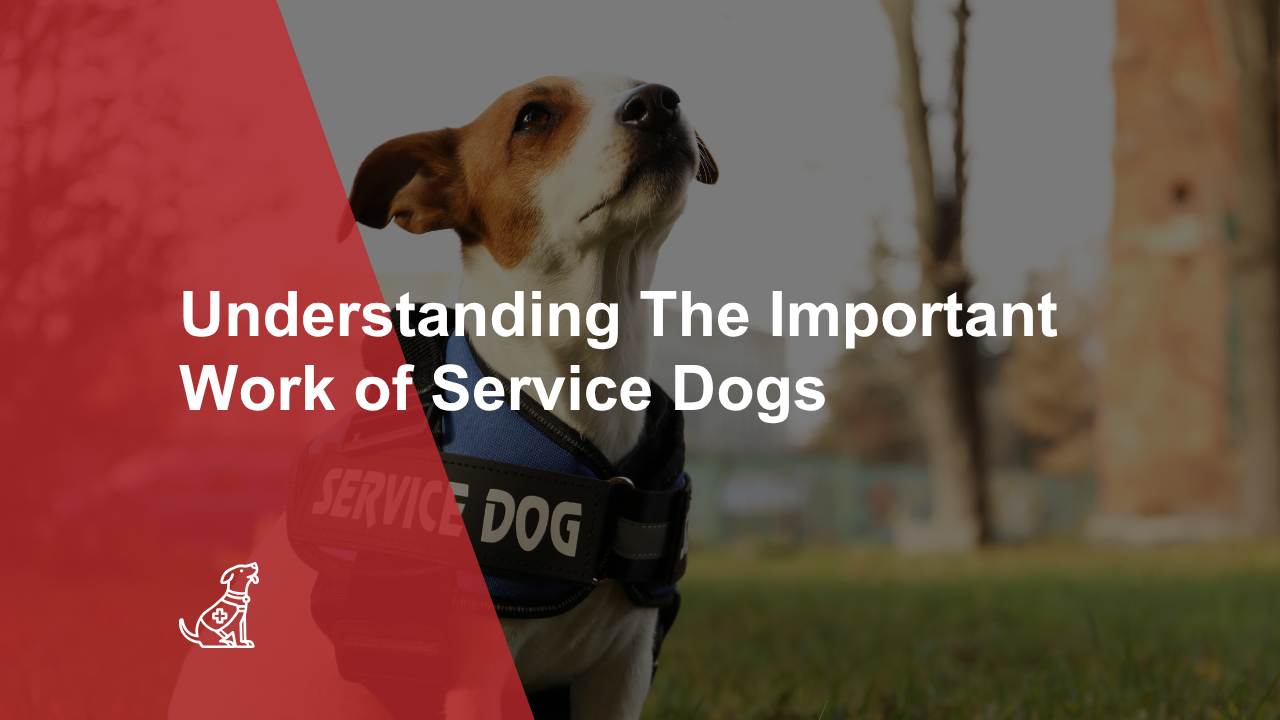
September is National Service Dog Month, making it a great opportunity to learn more about service dogs, the important work they do, and what sets them apart from other support animals. A service dog works specifically with a person with a disability and is trained to perform tasks that help mitigate that person’s disability. Service dogs also receive extensive obedience and public access training so they can work safely and appropriately in busy public environments.
Understanding Service Dog Laws in Canada
Service dog laws in Canada can be complicated because there is no single federal standard or certification that applies across the country. Each province and territory has its own service animal laws and requirements. Service animals may be owner trained, trained with the support of a professional trainer, supplied by a non-profit program, or purchased from a for-profit program. British Columbia, Alberta and Nova Scotia also offer voluntary government certification after a service dog team successfully completes a public access test.
It is also important to understand that a vest, patch, ID card or certificate purchased online does not make a pet a service dog or prove that the dog has received appropriate training. Service dog gear serves practical purposes, from identifying a working dog to providing support, safety and comfort, but it is not proof of training or certification. Depending on the province, a service dog may not be required to wear a vest or other visible identifier at all.
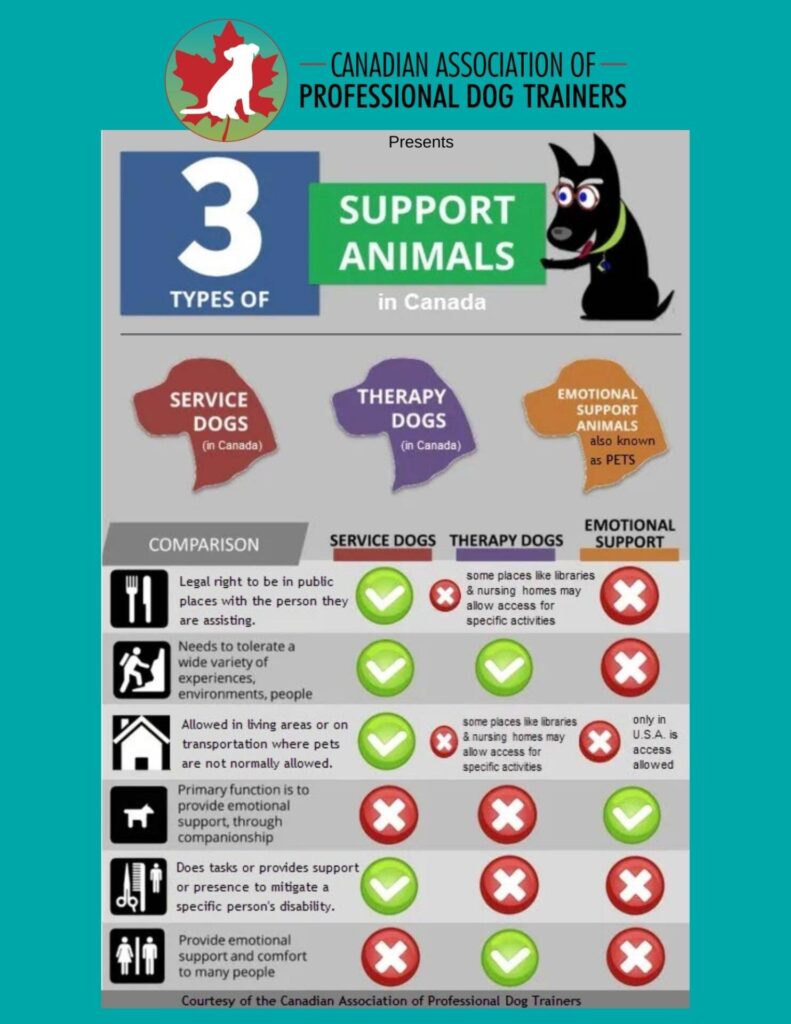
Service Dogs, Therapy Dogs and Emotional Support Animals
Service dogs are also different from therapy dogs and emotional support animals. Service dogs are trained to work with a specific person with a disability, while therapy dogs provide support and comfort to many people in settings such as care facilities or libraries. Emotional support animals primarily provide companionship and emotional support and are not generally granted the same public access protections as service dogs in Canada. Understanding these differences helps service dog teams, businesses and members of the public navigate shared spaces with greater confidence and respect.
Want to learn more about service dogs and responsible dog training in Canada? Explore CAPDT’s articles, member’s benefits or reach out to our Service Dog Committee at servicedogs@capdt.ca